Spring Summer 2026
The Tactile Season
A gentleman’s guide to autumn/winter layering
True luxury has never announced itself across a crowded room. For the man who values precision, whether tuned into the mechanical feedback of a vintage flat-six gearbox or the weightless drape of hand-set shoulder seams, sartorial elegance is an intimate dialogue between the wearer and the material.
As temperatures dip across London and northern climes, the instinct to retreat into heavy, restrictive clothing is outdated. The modern Italian approach to the colder months rejects rigid corporate armour in favour of deconstructed tailoring, tactile depth, and functional engineering. Layering is not merely a response to weather; it is an art of quiet confidence.
Soft architecture, not corporate armour
The stiff, fused jacket was built for a room that no longer exists. Padded shoulders, a chest piece that holds its shape whether or not anyone is inside it, a lining that turns the torso into a warm cabinet by the time the taxi arrives. Soft construction does the opposite. An unlined or half-lined jacket, a shirt shoulder, canvas that yields: it sits on the body the way a well-cut driving coat sits on a seat. Present, then forgotten.
That is the only argument worth having this season. Not navy versus charcoal. Not whether a rollneck is permitted under a blazer. Whether the clothes are engineered to move, or engineered to look like tailoring from across a boardroom.
A city day
Start at the skin. A Fray or Mazzarelli shirt hand-attached sleeves, mother-of-pearl, a brushed cotton twill or light flannel already feels worn in. Over it, a Fedeli crew in ultra-fine helium wool, or a Fioroni mock neck if the wind is up. Thirteen-micron cloth is the point: heat without a second torso. When the day is less formal and the knit should disappear under the jacket rather than announce itself, Marco Pescarolo’s jersey layers do the same job with less ceremony.
The jacket is a Belvest, a Lardini, a Boglioli or, if the shoulder should have a little more Neapolitan life, a Stile Latino. Brushed wool, cashmere, a garment dye. Soft spalla camicia. No fuse fighting the lapel. It should still look like a jacket when you stand up from a low chair. Stile Latino gets its structure from drape rather than padding; Belvest, Lardini and Boglioli from cloth that has been allowed to move. Same idea, different hand.
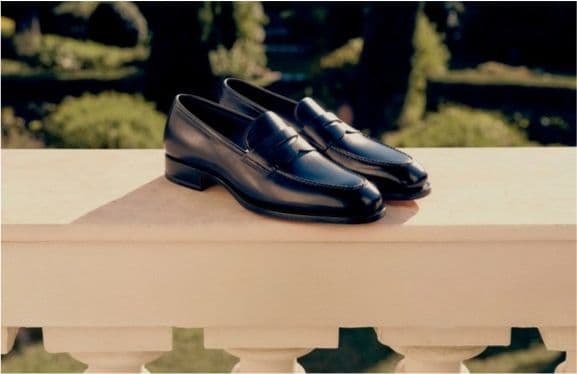
Below, Rota. High-twist wool or flannel, a clean break, nothing pooling over the shoe. Santoni in hand-burnished leather for the pavement, reverse-calf suede if the day ends indoors. Stone, espresso, charcoal, deep navy, stacked rather than contrasted. Depth comes from the nap of the flannel against the dry hand of the jacket, not from a pattern.
A driving day, or a Saturday
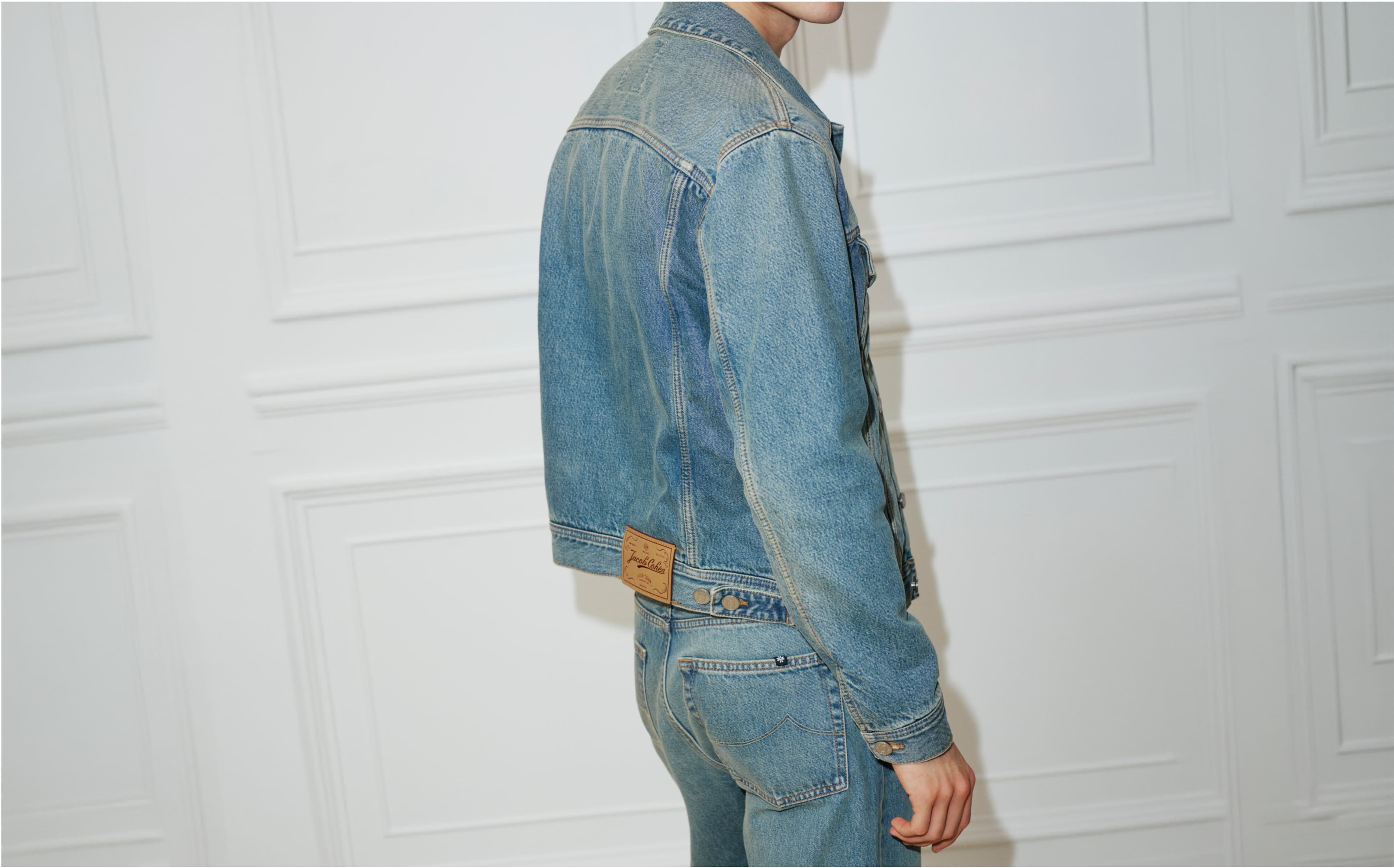
The same logic, looser register. Swap the Rota for five-pocket denim from Richard J. Brown or Jacob Cohën. These are not weekend jeans in the utility sense. Japanese selvedge with a hint of stretch, a hand-stitched finish, a taper that still reads as trousers under a soft blazer. The mistake is treating denim as a costume change. Cut correctly, it is simply the less formal half of the same silhouette.
When a coat would catch on the wheel, the outer layer is suede. A Rifugio jacket, made in Naples, skived until the goatskin is glove-light, unlined or barely lined. The shoulder and arm are cut for a reach, not for a photograph. It marks with use. That marking is the point: a surface that records journeys rather than a finish that has to be protected from them. Men who actually drive tend to arrive at it for that reason, not because a logo told them to.
Weather, without the bulk
Rain is not a reason to abandon the proportion. MooRER, in Verona, builds outerwear the way a workshop builds a case: zippers, seams and down chambers held to a tolerance. Their golf capsule has drifted off the course and into the city for a simple reason. Wind-resistant, water-repellent, cut close, almost no branding. Useful on a platform in November whether or not anyone owns a set of clubs.
When the day asks for a proper overcoat instead, Corneliani’s unlined double-faced cashmere or wool-silk coats clear a soft blazer without pulling across the back. The test is physical. Sit. Reach. If the coat fights the jacket underneath, it is the wrong coat.
Flying under the radar
Sprezzatura, properly understood, is not rumpled nonchalance. It is the absence of anything that had to be added to make the outfit work: a logo, a stiff chest, a coat too heavy for the car. Noble fibre, a shoulder that moves, leather that will patinate. The recognition is private. That is the luxury.